
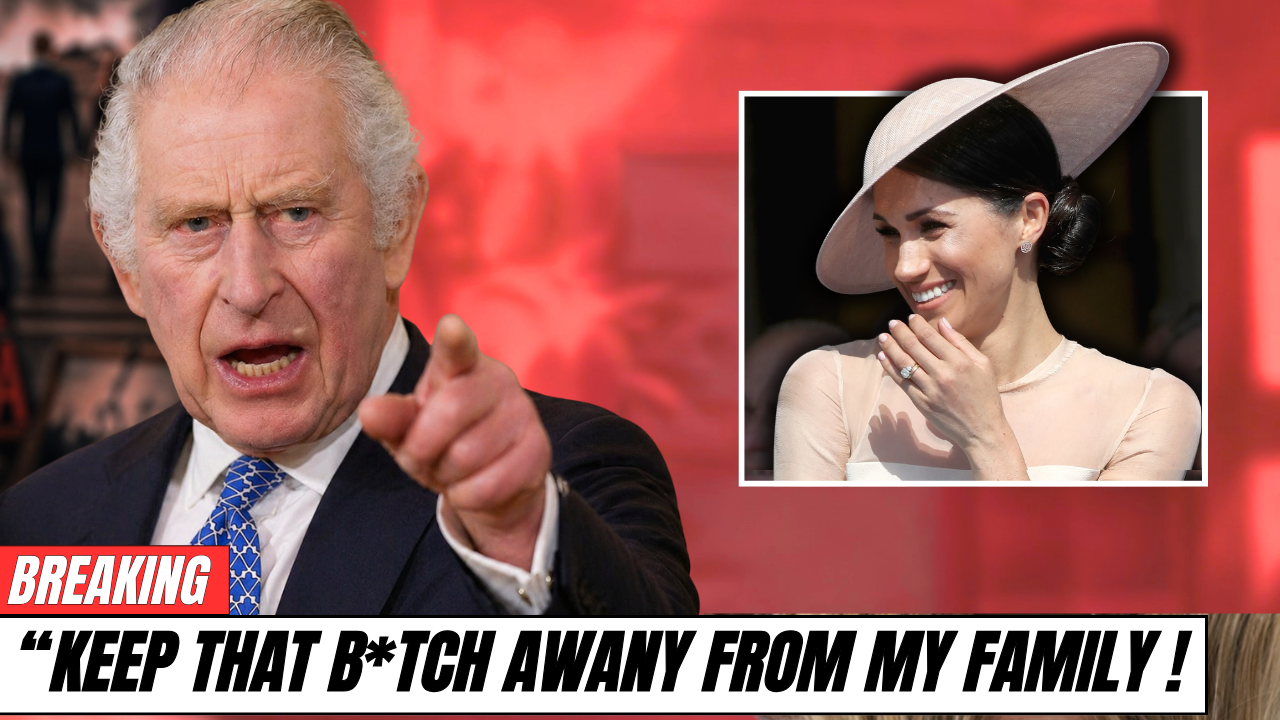
From Family Tension to Institutional Debate
The ongoing situation involving King Charles III, Prince Harry, and Meghan Markle has moved far beyond a private family disagreement. What once appeared to be a sensitive internal matter has now evolved into a widely discussed issue with implications for the structure, reputation, and future of the British monarchy. Increasingly, the narrative is not just about relationships—it’s about how a centuries-old institution responds to modern challenges, public scrutiny, and changing expectations.
The Core Issue: Blurred Lines Between Duty and Independence
At the center of this debate is the perception that Harry and Meghan are operating in a space that blends royal visibility with personal independence. Their public appearances often resemble traditional royal engagements, including charity visits and advocacy work. However, these moments are sometimes accompanied by commercial elements, which has raised concerns among critics about whether the distinction between public service and private gain is becoming unclear.
This situation directly contrasts with the long-standing principle upheld by Queen Elizabeth II, who maintained that there is no “half in, half out” approach to royal life. That philosophy emphasized a clear commitment to duty, something many believe is being tested in the current scenario.
Public Appearances and Commercialization Concerns
One of the most debated aspects of this situation involves the commercialization linked to public appearances. Meghan’s influence in fashion, for example, has extended into platforms where outfits worn during public engagements can be monetized. While influencer-style branding is common in today’s digital landscape, critics argue that applying it to settings like hospital visits or charitable events creates a disconnect between purpose and presentation.
Comparisons are often made with Catherine, Princess of Wales, whose public appearances also influence fashion trends but are not directly tied to personal financial gain. This distinction continues to shape public perception and fuels ongoing criticism.
The Privacy Paradox and Questions of Authenticity
Another major factor driving discussion is what many see as a contradiction between the couple’s call for privacy and their continued presence in the public eye. While Harry and Meghan have repeatedly emphasized their desire for personal space, their involvement in high-profile media projects and appearances keeps them at the center of global attention.
This perceived inconsistency has led to broader questions about authenticity. In the public sphere, authenticity is often tied to trust, and when messaging appears inconsistent, it can weaken credibility. Comparisons to Princess Diana frequently arise, as she remains a benchmark for relatability and public connection.
Business Relationships and Industry Perception
Beyond public appearances, the discussion extends into the professional world, particularly the Sussexes’ relationship with major platforms like Netflix. Reports suggest that efforts to maintain or rebuild industry relationships have become increasingly strategic, involving personalized outreach and carefully managed communication.
While such strategies are not unusual in business, critics argue that they may appear overly calculated, potentially affecting perceptions of authenticity. In industries driven by results, relationships often depend on performance, and evolving dynamics in these partnerships have added another layer to the ongoing narrative.
King Charles: Balancing Duty and Family
For King Charles III, the situation presents a complex challenge. As both a monarch and a father, he must navigate the tension between personal relationships and institutional responsibility. His approach so far has been characterized by caution and restraint, but growing criticism suggests that this strategy may be reaching its limits.
From an analytical perspective, inaction is increasingly being viewed as a form of action in itself. As controversies continue, expectations are rising for clearer decisions that reinforce the boundaries of royal roles and responsibilities.
Prince William and the Future of the Monarchy
The discussion also frequently turns to Prince William, who is often seen as representing a more decisive and modern approach to leadership. While he is not directly involved in these controversies, his perceived willingness to make firm decisions has led many to speculate about how the monarchy might evolve under his future reign.
At the same time, the presence of younger royals such as Prince George, Princess Charlotte, and Prince Louis reinforces the idea of continuity and renewal within the institution.
Public Support and Institutional Stability
Despite ongoing controversies, public opinion data suggests that support for the monarchy in the United Kingdom remains relatively stable, with a majority still favoring its continuation. This resilience indicates that while individual controversies may impact perception, the institution itself retains a strong foundational base.
However, stability does not eliminate pressure. Instead, it shifts the focus toward how effectively the monarchy can adapt and respond to modern challenges without compromising its core identity.
Looking Back: Early Signs and Missed Opportunities
Retrospective analysis suggests that the current situation may have developed gradually rather than suddenly. Reports indicate that even during the early stages of Meghan’s integration into royal life, there were complexities and challenges behind the scenes.
The perception that efforts were made to support her transition—through carefully selected roles and opportunities—adds another dimension to the discussion. For critics, the eventual breakdown raises questions about compatibility between individual ambition and institutional expectations.
Conclusion: A Defining Moment for the Modern Monarchy
The ongoing situation involving King Charles, Prince Harry, and Meghan Markle represents more than a series of controversies—it is a defining moment for the modern monarchy. It highlights the challenges of balancing tradition with change, personal freedom with institutional responsibility, and public expectation with private reality.
As the narrative continues to evolve, the focus is no longer just on what is happening, but on what comes next. The decisions made in this period will likely shape not only the immediate future of the royal family but also how the monarchy adapts to an increasingly complex and fast-moving world.