
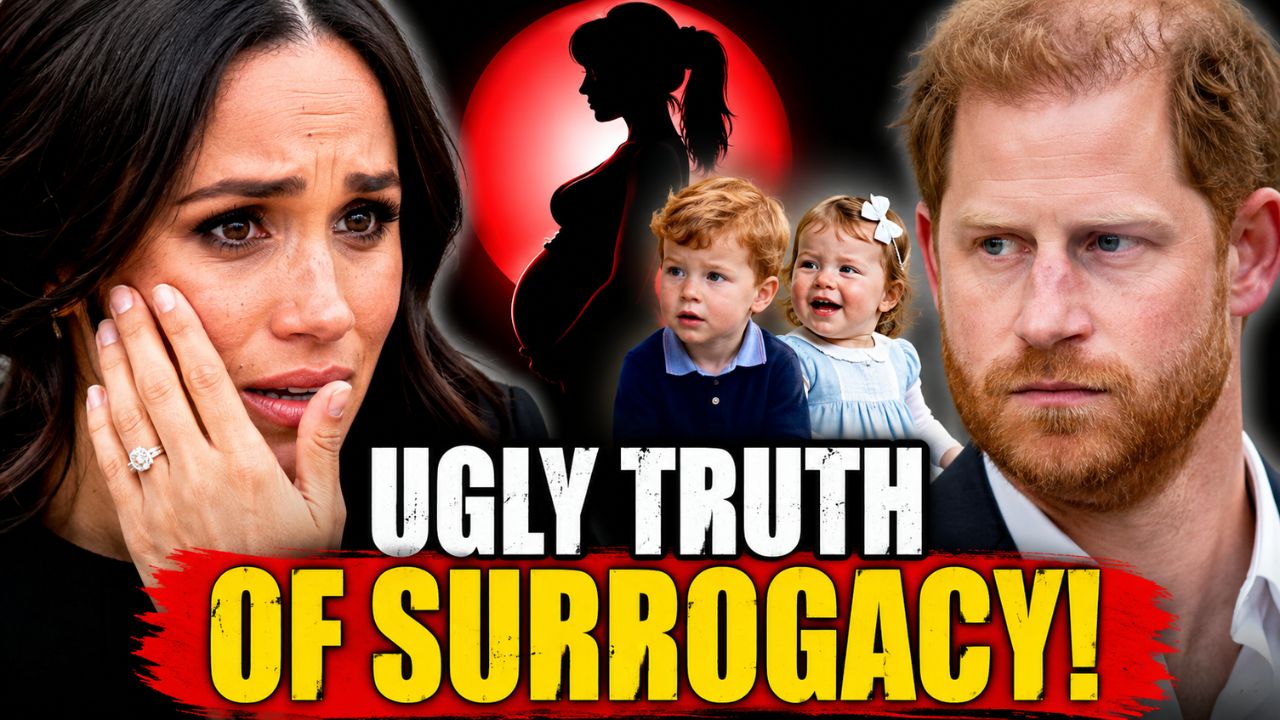
The debate surrounding Meghan Markle’s alleged surrogacy, Prince Harry, Archie, Princess Lilibet, and the British Royal Family has become one of the most widely discussed topics among royal commentators in recent years. Although there is no official evidence confirming that either child was born through surrogacy, speculation continues because of questions raised by commentators, differences in royal protocol, and ongoing discussions about the constitutional rules governing the British line of succession.
This article examines the timeline of events, separates verified facts from speculation, and explains why this controversy continues to dominate conversations among royal watchers worldwide.
Why Has the Meghan Markle Surrogacy Debate Returned?
The discussion surrounding Meghan Markle’s pregnancies is not new. Questions first surfaced shortly after the birth of Archie Harrison Mountbatten-Windsor in May 2019 and intensified again following the birth of Princess Lilibet Diana Mountbatten-Windsor in California in June 2021.
For several years, these discussions remained largely confined to online communities and independent royal commentators. Recently, however, the subject has resurfaced after multiple royal commentators revisited long-standing questions about the children’s births, royal documentation, and constitutional succession.
Despite renewed attention, Buckingham Palace has not confirmed any allegations regarding surrogacy, and Harry and Meghan have consistently presented Archie and Lilibet as their biological children.
Understanding the British Royal Line of Succession
One reason this topic attracts so much attention is because it extends beyond celebrity gossip.
Under centuries-old constitutional tradition, individuals in the British Royal Line of Succession have historically been expected to be “born of the body.” While modern surrogacy laws exist in the United Kingdom, constitutional scholars have noted that the succession rules have never been publicly updated to specifically address children born through surrogacy.
This historical requirement is why speculation surrounding Archie and Lilibet receives far greater scrutiny than similar rumors involving celebrities outside the Royal Family.
However, it is equally important to note that Archie and Princess Lilibet remain officially recognized members of the Royal Family and continue to appear in the line of succession.
Archie’s Birth and the Beginning of Public Questions
When Archie was born in May 2019, Harry and Meghan deliberately departed from several longstanding royal traditions.
Unlike previous senior royal births, there was no public hospital photo opportunity immediately after delivery. The official announcement differed from previous royal birth notices, and Meghan chose not to use the royal medical team that had assisted other senior members of the Royal Family.
Supporters viewed these decisions as a reasonable effort to protect family privacy after years of intense media attention.
Critics argued that constitutional significance required greater transparency because Archie would enter the royal line of succession.
Although these differences fueled speculation, none of them constitute proof of wrongdoing.
Princess Lilibet’s Birth in California
Princess Lilibet Diana was born in Santa Barbara, California, in June 2021 after Harry and Meghan had stepped away from official royal duties.
Because the birth occurred in the United States, documentation followed California law rather than traditional British royal customs.
This created another wave of online discussion, with some commentators attempting to analyze publicly available records while others argued that ordinary administrative procedures explained any perceived inconsistencies.
Again, no official investigation has concluded that surrogacy occurred, despite widespread speculation online.
Why Royal Commentators Continue Discussing Surrogacy
Several royal commentators have publicly claimed that confidential sources raised questions about the circumstances surrounding the children’s births.
These claims have generated widespread discussion across YouTube, podcasts, social media, and independent news platforms.
However, anonymous sources cannot independently verify extraordinary allegations.
Many journalists have therefore emphasized the importance of distinguishing between:
- Official public records
- Anonymous claims
- Personal opinions
- Verified evidence
This distinction remains central to understanding the ongoing controversy.
Royal Titles and the Succession Debate
Following the death of Queen Elizabeth II in 2022, King Charles III became monarch.
As grandchildren of the reigning monarch through the male line, Archie and Lilibet became entitled to use the titles of Prince Archie and Princess Lilibet under longstanding royal convention.
Their titles later appeared on the official Royal Family website after being publicly used during Lilibet’s christening.
Supporters viewed this as confirmation that the monarchy recognizes both children.
Others argued that official recognition does not necessarily answer every constitutional question that has been raised.
Nevertheless, the current official position remains unchanged.
Why the Palace Rarely Responds to Speculation
Buckingham Palace traditionally avoids responding to rumors unless constitutional matters require official clarification.
This long-standing communication strategy prevents the monarchy from becoming involved in every allegation circulating online.
However, in the digital age, silence is frequently interpreted in different ways.
Some view it as evidence that nothing unusual occurred.
Others believe unanswered questions encourage continued speculation.
The Palace itself has not publicly addressed most of the claims circulating regarding surrogacy.
Harry and Meghan’s Emphasis on Privacy
Throughout their relationship, Harry and Meghan have consistently argued that they deserve the same medical and family privacy as any other couple.
After years of intense tabloid coverage, they chose to limit public access to their children’s births and early lives.
Supporters believe this approach was entirely reasonable.
Critics argue that members of the Royal Family who occupy places in the line of succession have unique constitutional responsibilities that justify greater transparency.
The disagreement reflects a broader debate between modern expectations of personal privacy and centuries-old royal traditions.
How Social Media Has Changed the Conversation
Unlike previous royal controversies, today’s discussions unfold across YouTube, Facebook, X (formerly Twitter), podcasts, and independent media channels.
Thousands of creators analyze timelines, interviews, official announcements, and publicly available documents.
Some focus primarily on official records.
Others emphasize inconsistencies they believe deserve further explanation.
This constant flow of competing information makes it increasingly difficult for audiences to distinguish verified facts from speculation.
Verified Facts vs Public Speculation
Several important facts remain publicly established.
Prince Harry and Meghan Markle have consistently stated that Archie and Lilibet are their children.
Buckingham Palace officially recognizes both children.
Archie and Princess Lilibet remain in the British line of succession.
No official authority has publicly concluded that either child was born through surrogacy.
At the same time, speculation continues because some commentators believe certain historical questions have never received satisfactory public explanations.
That ongoing uncertainty continues fueling online debate.
Why This Story Continues to Fascinate Royal Watchers
The Meghan Markle surrogacy controversy sits at the intersection of constitutional law, royal tradition, celebrity culture, media scrutiny, and public curiosity.
Each new interview, documentary, legal case, or public appearance involving Harry and Meghan often renews interest in older controversies.
Supporters argue that the couple deserve privacy and that speculation should not replace documented evidence.
Critics maintain that constitutional issues involving succession justify continued public scrutiny.
Because these two perspectives rarely overlap, the debate has remained active for years.
Final Thoughts
The discussion surrounding Meghan Markle’s alleged surrogacy, Prince Harry, Archie, Princess Lilibet, and the British Royal Family continues to attract enormous public interest.
While numerous commentators have raised questions over the years, no official evidence has confirmed the central allegations, and the Royal Family continues to recognize Archie and Lilibet according to the current constitutional record.
Until verifiable new evidence emerges or official clarification changes the established public position, the debate is likely to remain one of the most closely followed—and most controversial—topics in modern royal history.